Understanding Disc Herniation
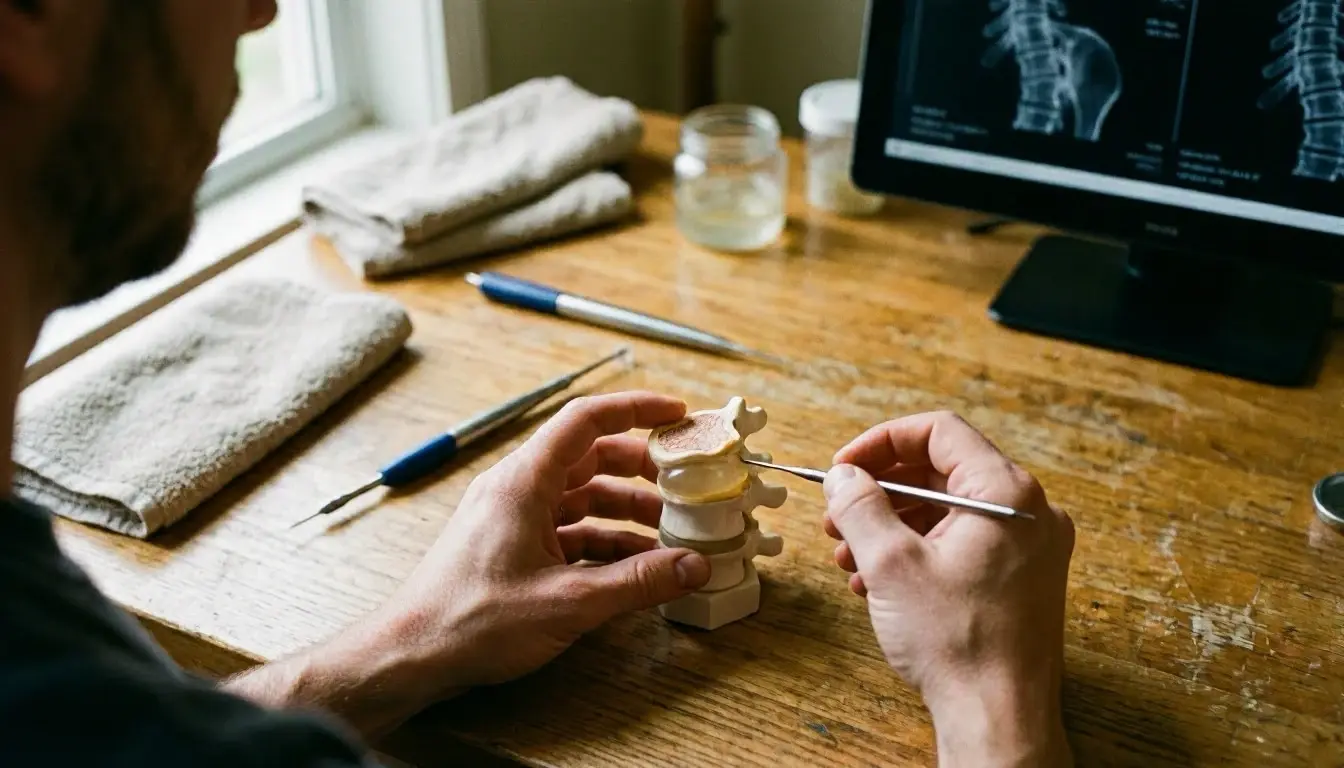
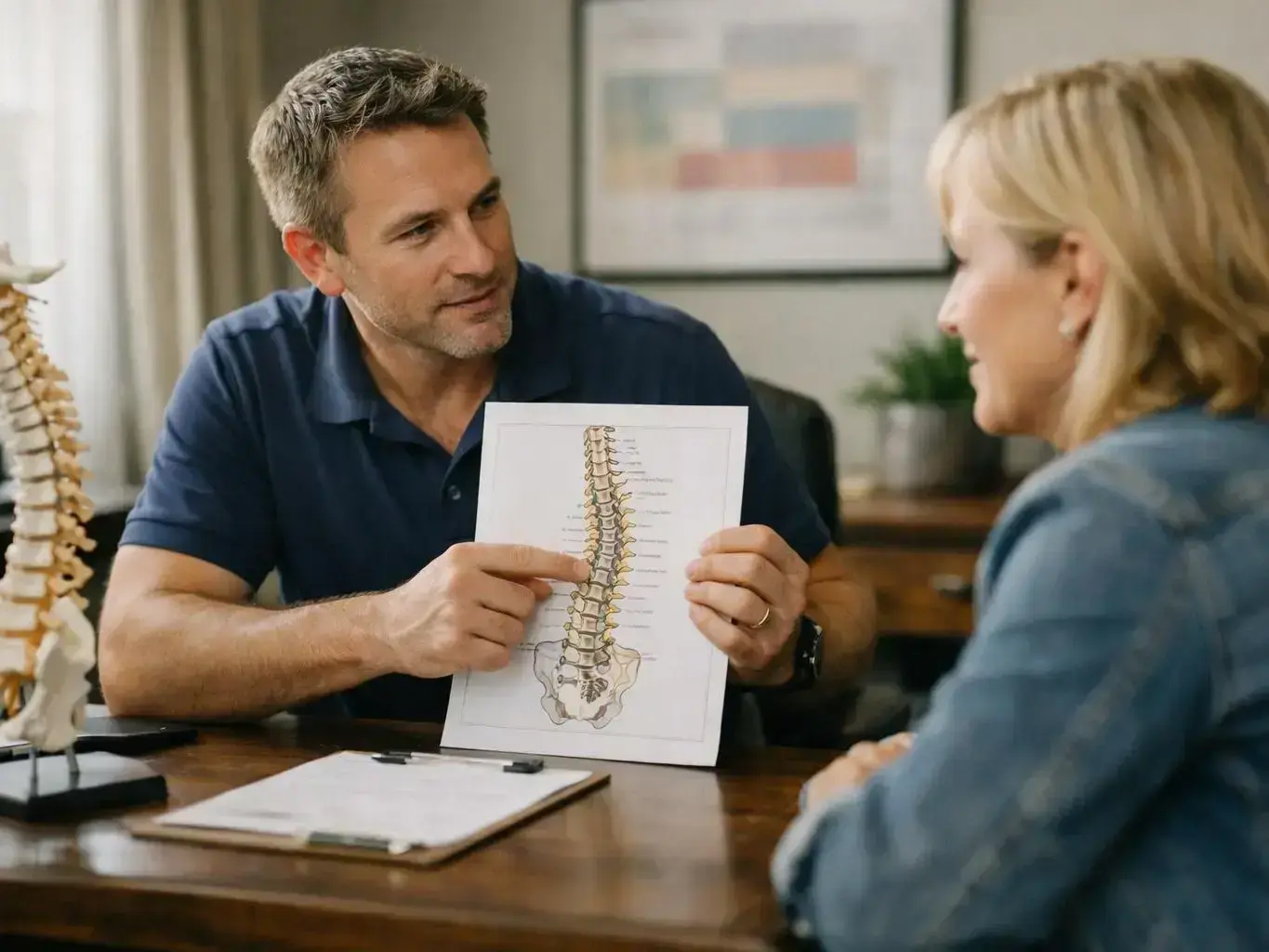
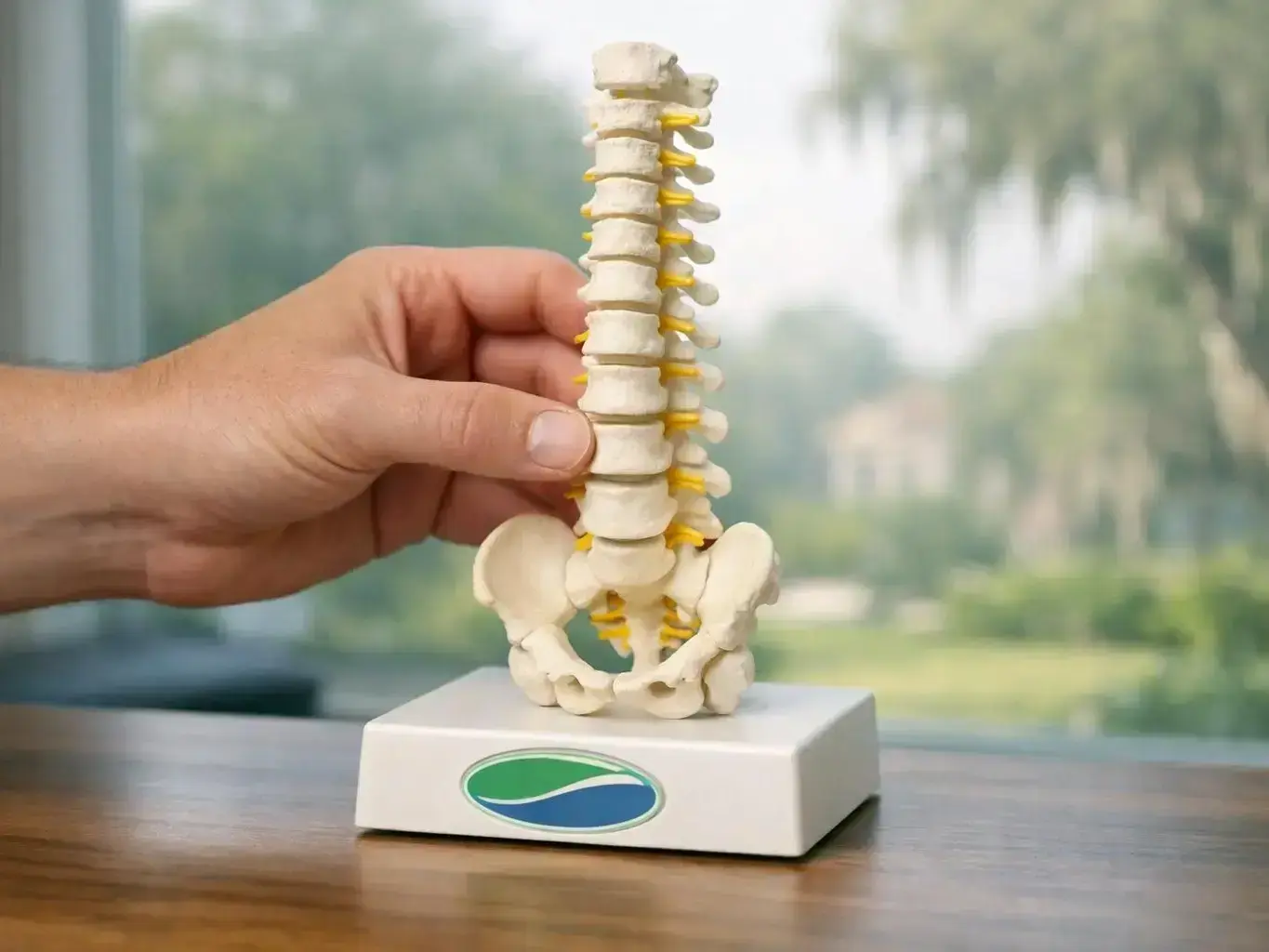
A disc herniation hurts your spine. The spine has bones called vertebrae. Between them are soft discs.
Related glossary terms: Back Pain, Spinal Decompression, Chiropractic Adjustment.
These discs act like cushions. Each disc has a soft center. The center is like jelly.
The jelly is called the nucleus pulposus. Around it is a tough layer. That layer is the annulus fibrosus.
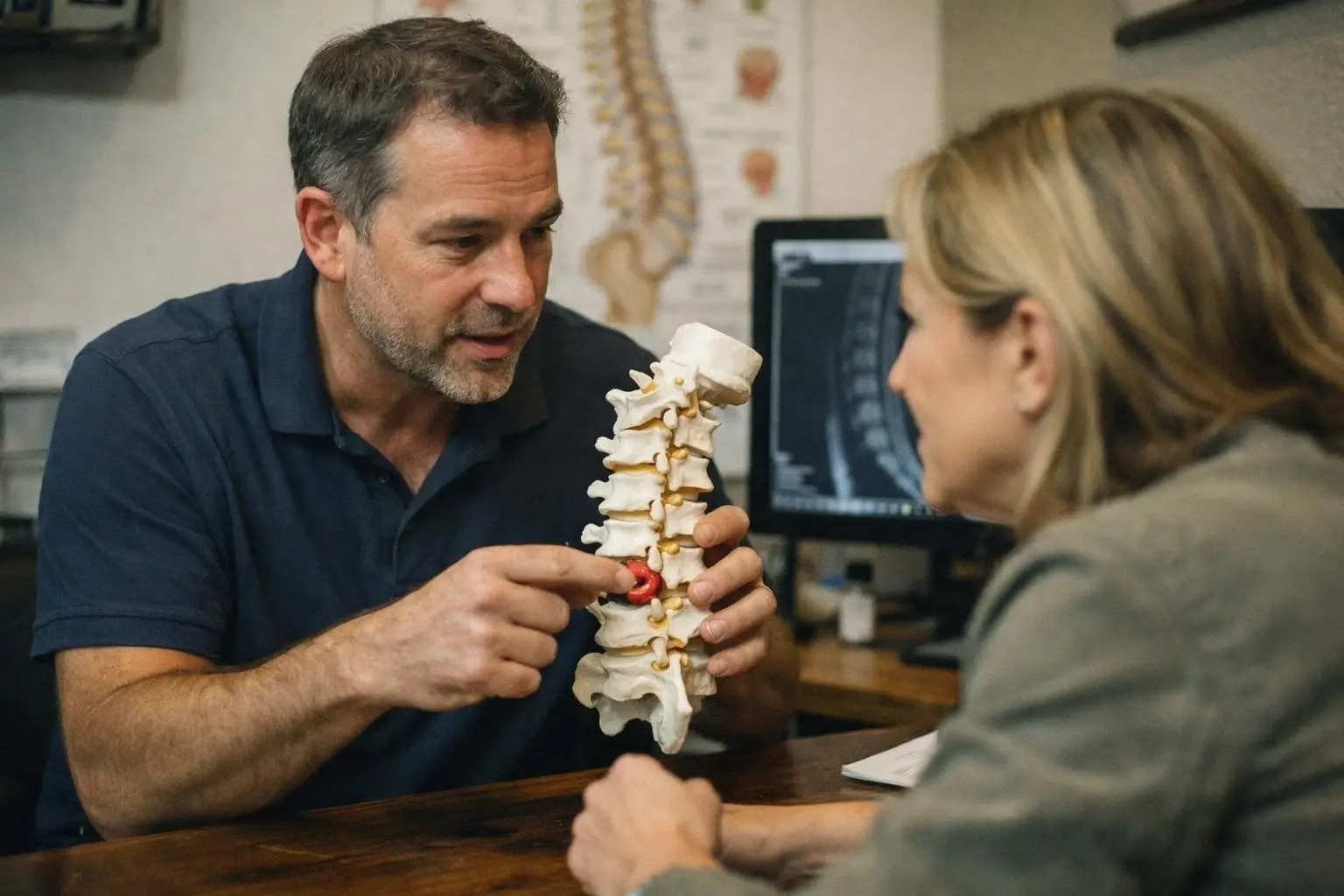
Sometimes the tough layer tears. The jelly can push through. This is called a herniation.
The bulging disc can press on nerves. This causes pain. You might feel tingling or weakness too.
Your spine has three parts. The neck is the cervical area. The mid-back is the thoracic area.
The lower back is the lumbar area. Herniated discs happen most in the lumbar and cervical parts.
These parts hold more weight. They also move a lot. This causes more stress.
Aging is a common cause. Discs lose water over time. They become less flexible.
Sudden injuries can also cause herniations. So can lifting wrong. Doing the same motion over and over hurts too.
Some people feel no symptoms. Others feel sharp pain. They might feel numb or have sciatica.
Sciatica is pain down the leg.
How Disc Herniation Works?
A herniated disc can press on nerves. This disrupts how your spine works.
The spinal cord and nerves leave the spine. They go through small holes called foramen.
A herniated disc can block these holes. This pinches the nerves.
A lumbar herniation can press the sciatic nerve. This causes sciatica.
Sciatica is pain from the back down the leg. A cervical herniation can hurt your arm.
It might cause pain or numbness. This can go to your shoulder, arm. Or hand.
Doctors diagnose herniated discs in a few ways. They do a physical exam. They ask about your health.
They might use MRI or CT scans. These are pictures of your spine.
During the exam, they check your strength. They look at your reflexes. They find tender spots.
The scans show where the disc is hurt. They help rule out other problems. These include fractures or tumors.
Most herniated discs get better with rest. Ice or heat can help. Gentle exercises work too.
Chiropractic care can ease pain. So can physical therapy. Medicine can reduce swelling.
Why Disc Herniation Matters?
Disc herniation matters a lot. It can hurt your daily life. It limits how you move.
It causes pain that won't go away. If not treated, it can damage nerves.
You might get weak muscles. In bad cases, you could lose bladder control.
This is an emergency called cauda equina syndrome. Even small herniations can cause trouble.
They can make work hard. They can stop you from exercising. They can make sitting or sleeping hurt.
Getting help early stops worse problems. It helps you feel normal again.
Many herniated discs come from stress. Poor posture can cause them too.
Fixing these things can help. Try better chairs or desks. Do exercises to get stronger.
Change your habits to lower risks. Learning about the condition helps too.
You can pick the best treatment. Most people don't need surgery.
They try other things first. Surgery is only for very bad cases.
When Disc Herniation Matters Most?
Disc herniation is serious if pain is sudden. So is numbness that won't go away.
Weak muscles are a warning too. Pain down your arm or leg needs quick help.
This could mean a pinched nerve. Athletes and laborers get hurt more often.
Their jobs put stress on their backs. Older people can get herniations too.
Their discs wear out over time. Early help keeps them moving well.
Some habits make herniations worse. Lifting heavy things can hurt.
Sitting too long is bad. So is slouching.
People who sit a lot can get herniations. Their muscles get weak.
Weak muscles don't support the spine. Know the risks to stay safe.
Lift with your legs, not your back. Take breaks from sitting.
Do exercises to get stronger. In Riverdale, GA, many jobs can hurt your back.
These include logistics, healthcare. And trades. Learning about herniations helps.
It can stop injuries at work. It can help you heal faster too.