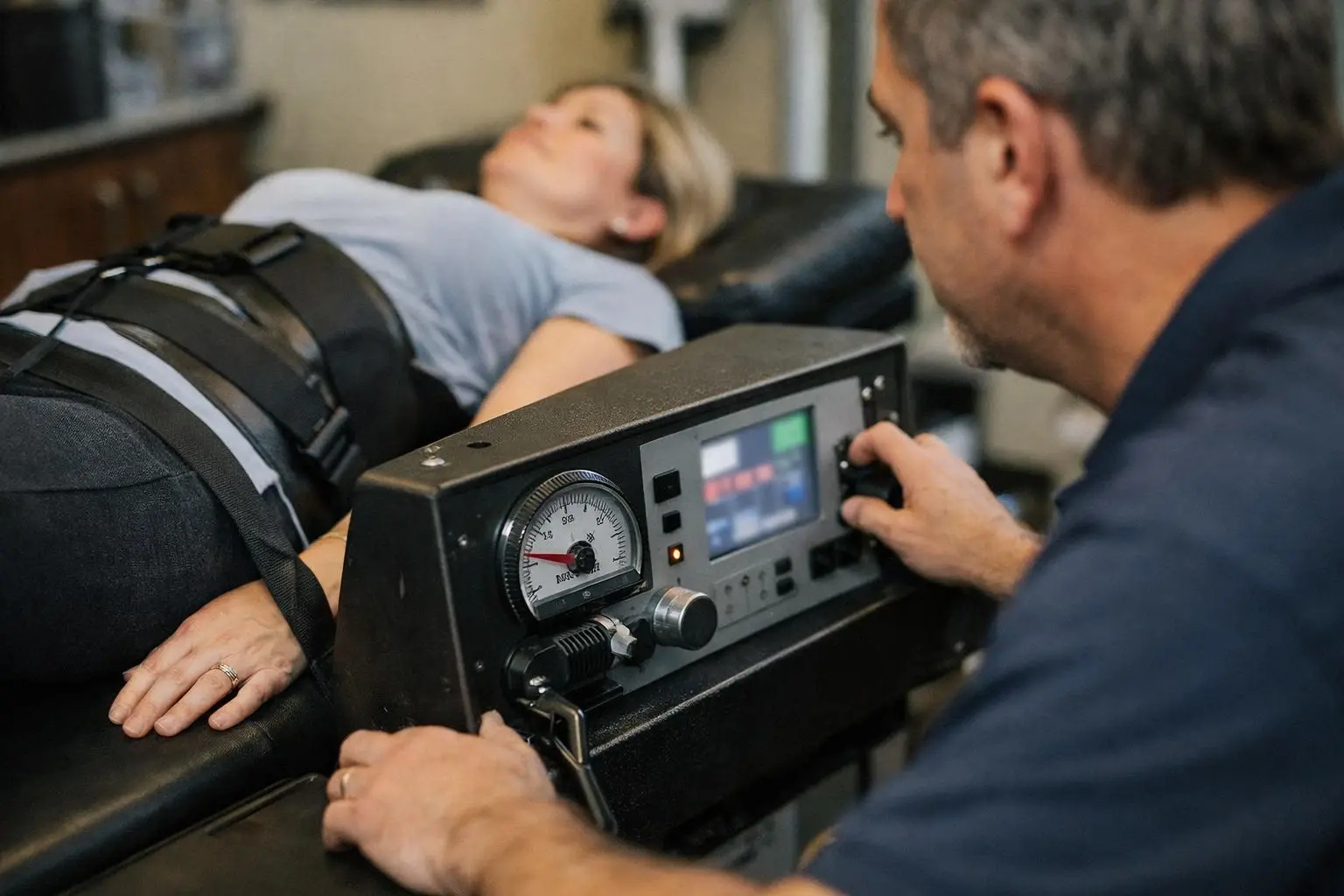
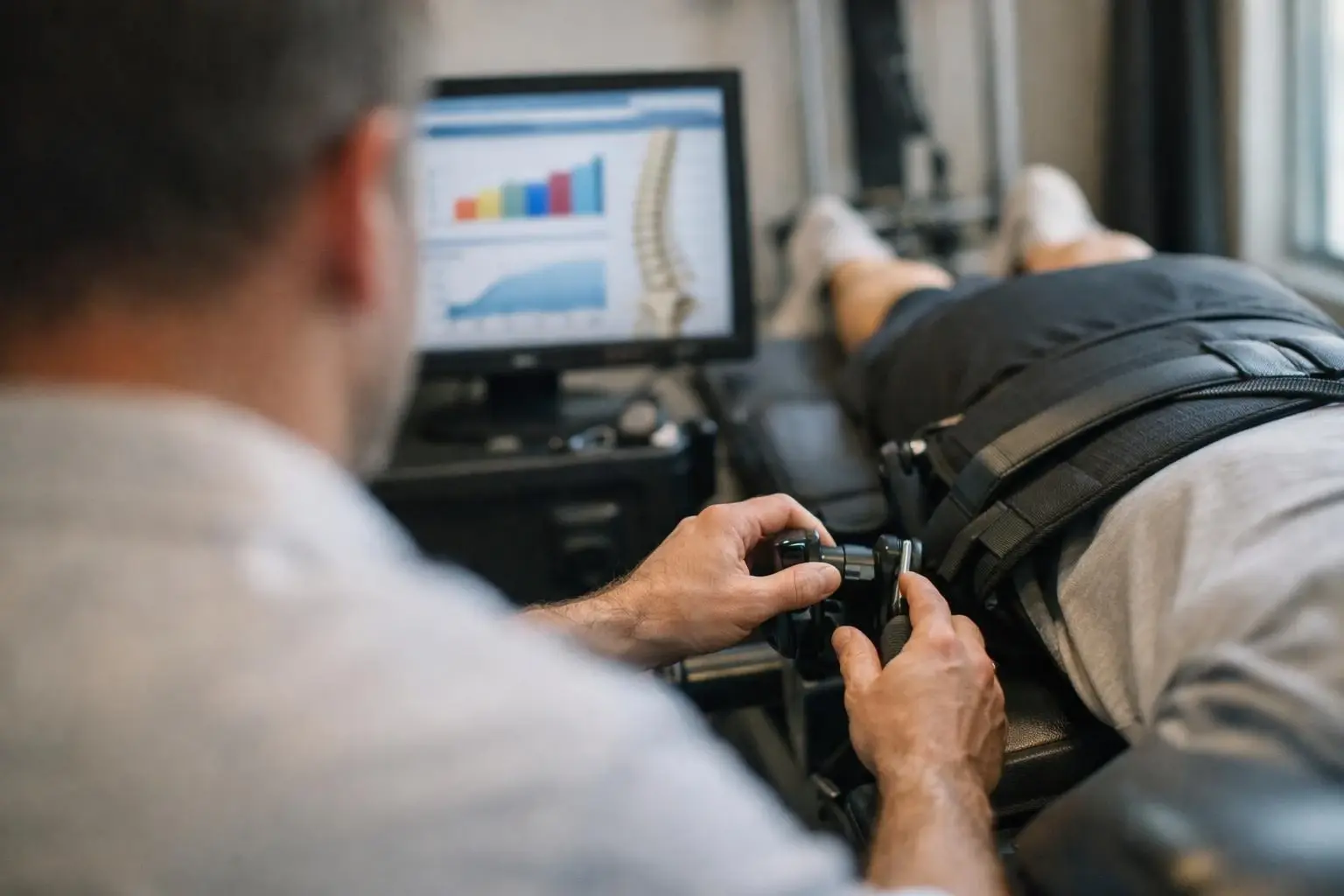
Spinal Decompression is a non-surgical treatment designed to relieve pressure on the spine and spinal discs. It involves gently stretching the spine to create negative pressure, which helps herniated or bulging discs retract, improves nutrient flow. And reduces nerve compression. This therapy is often used for conditions like sciatica, herniated discs. And chronic back pain.
Category
Non-surgical spinal therapy
Used for
Herniated discs, sciatica, chronic back pain
Common confusion
Often mistaken for spinal manipulation or traction
Also called
Decompression Therapy, Non-Surgical Spinal Decompression
Often discussed with
Chiropractic Consultation and Diagnosis, Car Accident Injury Rehabilitation

Spinal Decompression is a therapeutic technique aimed at relieving pressure on the spine. The spine consists of vertebrae, discs, nerves. And ligaments, all of which can become compressed due to injury, poor posture. Or degenerative conditions. When discs herniate or bulge, they can press on nerves, causing pain, numbness. Or weakness. Spinal Decompression works by gently stretching the spine, which creates negative pressure within the discs. This negative pressure helps herniated or bulging discs retract, reducing pressure on nerves and promoting healing.
Related glossary terms: Herniated Disc, Chiropractic, Spinal Manipulation.
The treatment is non-invasive, meaning it doesn't involve surgery or injections. It's often used as part of a broader chiropractic or physical therapy plan to address chronic back pain, sciatica. And other spinal conditions. Unlike spinal manipulation, which involves quick, targeted adjustments, Spinal Decompression uses a controlled, gradual stretch to achieve results. Patients typically lie on a specialized table while a machine or therapist applies gentle force to the spine.
Spinal Decompression therapy typically involves the use of a motorized table or device. The patient is secured comfortably on the table, often with straps around the pelvis and trunk. The table then applies a gentle, controlled stretching force to the spine. That is the practical point. This force is carefully calibrated to avoid causing discomfort or injury. The stretching creates negative pressure within the spinal discs, which can help herniated or bulging discs retract and draw in nutrients to promote healing.
Each session usually lasts between 20 to 45 minutes, depending on the patient's condition and treatment plan. A typical course of treatment may involve 15 to 30 sessions over several weeks. During the session, patients may feel a gentle pulling or stretching sensation. But the process is generally painless. Some patients even report feeling relaxed or falling asleep during treatment. The goal is to reduce pressure on the nerves and discs, allowing the spine to heal naturally over time.
Spinal Decompression is often combined with other therapies, such as cold laser therapy, electrotherapy. Or manual adjustments, to boost results. For example, a chiropractor might recommend Spinal Decompression alongside exercises or stretches to strengthen the muscles supporting the spine. This multi-faceted approach can help address the root cause of pain and prevent future issues.
Spinal Decompression matters because it offers a non-surgical option for people suffering from chronic back pain, herniated discs. Or sciatica. Many patients with these conditions struggle with daily activities, such as sitting, standing. Or walking, due to pain or discomfort. Surgery can be invasive, expensive. And require lengthy recovery times, making non-surgical alternatives like Spinal Decompression an attractive option. By reducing pressure on the spine, this therapy can help patients avoid surgery and return to their normal activities more quickly.
Another key benefit of Spinal Decompression is its ability to promote natural healing. The negative pressure created during treatment helps draw nutrients and oxygen into the discs, which can accelerate the healing process. This is particularly important for discs, which have limited blood supply and rely on movement and pressure changes to receive nutrients. By improving disc health, Spinal Decompression can help prevent future injuries and reduce the risk of chronic pain.
Spinal Decompression is most beneficial for individuals experiencing chronic back or neck pain due to herniated discs, bulging discs. Or sciatica. It is also helpful for those who have not found relief from other treatments, such as medication, physical therapy. Or spinal manipulation. Patients with nerve compression, degenerative disc disease. Or spinal stenosis may also benefit from this therapy. But it is not suitable for everyone. People with certain conditions, such as fractures, tumors. Or severe osteoporosis, should avoid Spinal Decompression, as it could worsen their condition.
This treatment is often recommended for patients who want to avoid surgery or who are not candidates for surgical intervention. It is also a good option for those looking for a non-invasive, drug-free approach to pain relief. In Riverdale, GA, where many residents lead active lifestyles, Spinal Decompression can help individuals recover from injuries or manage chronic conditions without disrupting their daily routines. For example, someone recovering from a car accident or sports injury might use Spinal Decompression to reduce pain and improve mobility.
Before starting Spinal Decompression, a chiropractor or healthcare provider will conduct a thorough evaluation to determine if the treatment is appropriate. This evaluation may include a physical exam, medical history review. And imaging tests like X-rays or MRIs. The provider will also discuss the patient's goals and expectations to create a personalized treatment plan.
Spinal Manipulation involves quick, targeted adjustments to the spine to improve alignment and mobility. Spinal Decompression, on the other hand, uses a gentle, sustained stretch to relieve pressure on discs and nerves.
Traction is a general term for stretching the spine, often using manual force or simple devices. Spinal Decompression is a more advanced form of traction that uses motorized tables to create precise, controlled stretching for specific conditions.
A Chiropractic Adjustment focuses on correcting misalignments in the spine through quick thrusts. Spinal Decompression is a slower, gentler process aimed at relieving pressure on discs and nerves.
Spinal Decompression is not a one-size-fits-all solution. The effectiveness of the treatment depends on the patient's specific condition, the provider's technique. And the consistency of sessions. Combining it with other therapies, such as strengthening exercises, can enhance long-term results.
A 45-year-old construction worker in Riverdale, GA, developed chronic lower back pain after lifting heavy materials on the job. His chiropractor recommended Spinal Decompression to relieve pressure on a herniated disc. After 20 sessions, he reported less pain and improved mobility, allowing him to return to work without surgery.
Herniated Disc is a spinal condition where the soft, jelly-like center of a spinal disc pushes through a tear in the tougher outer layer. This bulging material can press on nearby nerves, causing pain, numbness. Or weakness in the back, arms. Or legs. Herniated discs often occur in the lower back or neck and may result from aging, injury. Or strain.
Chiropractic is a healthcare profession focused on diagnosing and treating musculoskeletal disorders, particularly those related to the spine. Chiropractors use hands-on spinal manipulation and other therapies to help the body heal itself without surgery or medication. The goal is to improve function, reduce pain. And support overall health by ensuring proper alignment of the body’s structure.
Spinal Manipulation is a hands-on technique used by chiropractors and other trained healthcare providers to apply controlled force to a joint in the spine. The goal is to improve spinal motion, reduce pain. And restore function by realigning vertebrae that may be misaligned or restricted. This method is commonly used to treat back pain, neck pain. And headaches.
Physical Rehabilitation is a structured process designed to help individuals regain strength, mobility. And function after injury, surgery. Or illness. Physical Rehabilitation uses exercises, manual techniques. And assistive tools to reduce pain, restore movement. And improve daily activities. It's often guided by healthcare professionals like chiropractors, physical therapists.
Arrowhead Clinic Chiropractor
Contact Arrowhead Clinic Chiropractor for practical guidance on Spinal Decompression and related chiropractor work in Riverdale.