Glossary

What is Flexion-Distraction?

Flexion-Distraction is a gentle, non-surgical chiropractic technique used to treat spinal conditions like herniated discs, sciatica. And back pain. It involves a specialized table that stretches and flexes the spine to relieve pressure on nerves, improve mobility. And promote healing without forceful manipulation.

Reviewed by Dr. Harry W. Brown, D.C.Sources reviewed: American Chiropractic Association, Journal of Manipulative and Physiological Therapeutics

Quick Facts About Flexion-Distraction

Category

Chiropractic technique

Used for

Herniated discs, sciatica, back pain. And spinal decompression

Common confusion

Often mistaken for spinal manipulation. But uses stretching instead of thrusts

Also called

Cox Technique, Flexion-Distraction Therapy

Often discussed with

Chiropractic Consultation and Diagnosis, Car Accident Injury Rehabilitation

Key Takeaways About Flexion-Distraction

Understanding Flexion-Distraction
Flexion-Distraction in Chiropractor—Riverdale

Flexion-Distraction is a way to help spines. It does this without surgery or hard pushes.

Related glossary terms: Herniated Disc, Spinal Decompression, Chiropractic Adjustment.

Most spine fixes use quick moves. This method uses a table that moves slow and steady.

The table stretches the spine in a gentle way. This takes pressure off discs and nerves.

It works well for people with bad discs or sciatica. It also helps those with long-term back pain.

Some people can't handle hard spine fixes. This is a softer choice for them.

Flexion-Distraction helps spines move right. It also helps them heal.

The stretch makes discs taller. It also brings more blood to the area.

More blood means less swelling. Less swelling means less pain.

Many people like this method. It's gentler than most spine fixes.

Doctors often use it with other treatments. This helps people get better for good.

How Flexion-Distraction Works?

This therapy uses a special table. The table moves to help the spine.

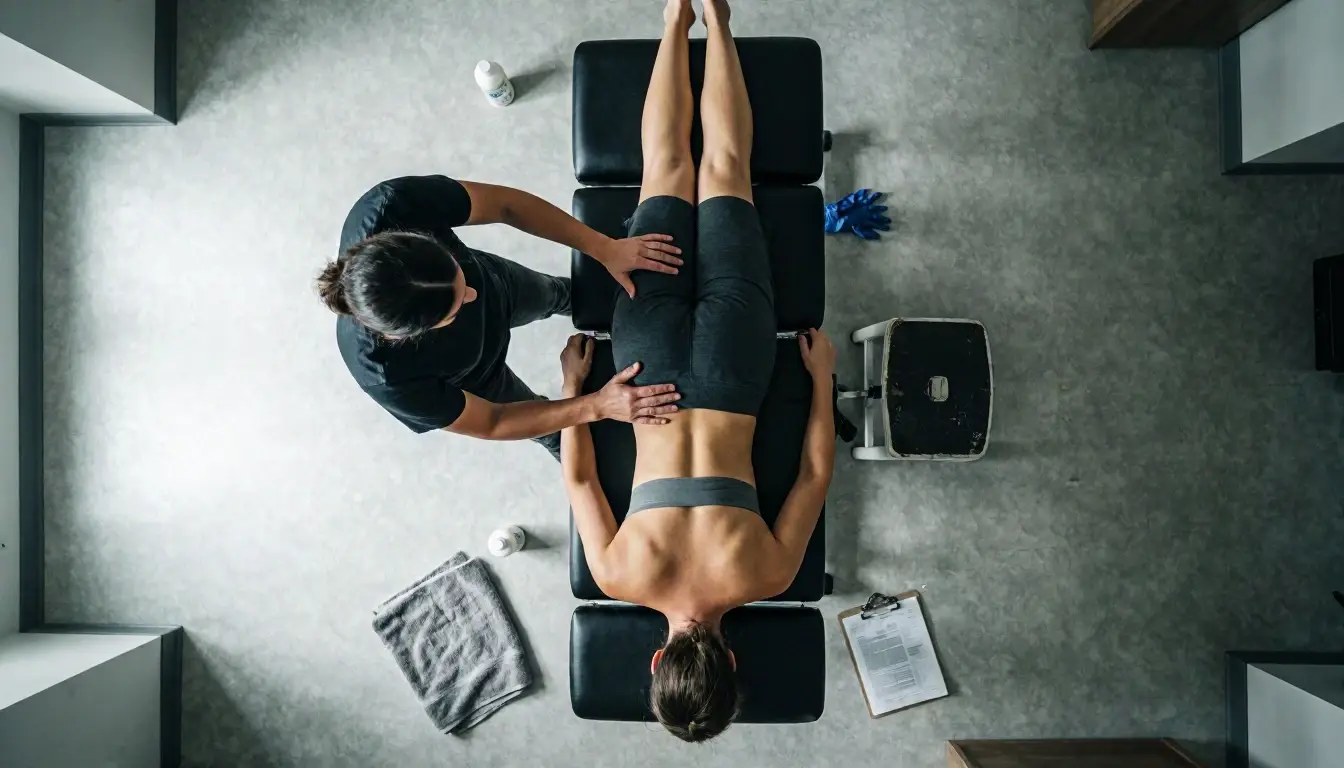
The patient lies face down. The doctor moves the table with a lever.

The table bends and pulls the spine. This makes space between the bones.

More space means less pressure. Less pressure helps discs and nerves.

This can put discs back in place. It also helps joints move better.

The table moves slow and steady. Each session lasts 10 to 15 minutes.

The doctor picks moves for each person. The moves match their problem.

For a bad disc, the table may focus there. This can pull the disc back in.

It can also take pressure off nerves. The doctor may add other treatments too.

Most people need more than one session. How many depends on their problem.

Many feel better in a few weeks. The method is gentle for most people.

It works for new injuries or old pain. It's good for those who don't like hard fixes.

Why Flexion-Distraction Matters?

Flexion-Distraction is safe. It works well for people who can't handle hard fixes.

Bad discs or sciatica can pinch nerves. This can cause sharp pain or numbness.

Surgery or pills can help. But they can also cause problems.

This method doesn't need cuts or drugs. It gently pulls the spine apart.

This takes pressure off nerves. It can help without surgery.

The stretch also helps the body heal. It brings more blood to sore spots.

More blood means less swelling. Less swelling helps tissues heal.

Over time, people can move better. They may need fewer pills.

They might avoid surgery too. This method fixes the real problem.

For long-term back pain, it can help a lot. It works on what's causing the pain.

When Flexion-Distraction Matters Most?

This method helps with many spine problems. It works for bad discs or pinched nerves.

It also helps with sciatica or narrow spines. People with long-term back pain like it too.

It's good for injuries from car crashes. It helps with sports injuries too.

Older people or those with weak bones can use it. It's gentle for them.

People who don't like hard fixes can try this.

It's not for everyone. People with very weak spines may need something else.

Those with broken bones can't use it. Neither can people with some infections.

The doctor will check each person first. They'll ask about health and past problems.

In Riverdale, GA, doctors often use this. They mix it with other treatments.

These may include exercises or changes in daily life.

This method can help when others don't. Some people don't get help from pills.

Others don't like hard spine fixes. This can work better for them.

It fixes the cause of pain. It doesn't just hide the pain.

This can help people with long-term spine problems. It gives them lasting help.

How to Evaluate Flexion-Distraction?

Related Concepts Compared

Flexion-Distraction vs. Spinal Manipulation

Spinal manipulation uses quick, forceful thrusts to adjust the spine. While Flexion-Distraction uses slow, stretching motions on a specialized table to decompress the spine.

Flexion-Distraction vs. Spinal Decompression

Spinal decompression often refers to motorized traction devices. While Flexion-Distraction is a chiropractic technique performed on a moving table with manual or motorized control.

Flexion-Distraction vs. Intersegmental Traction

Intersegmental traction uses rollers to mobilize the spine passively. While Flexion-Distraction actively stretches and flexes the spine to target disc and nerve issues.

Expert Note

Flexion-Distraction is particularly effective for patients with disc-related conditions because it creates negative pressure within the disc, helping to retract herniated material and relieve nerve compression. Unlike traction, it combines flexion with distraction for a more dynamic effect on spinal mechanics.

Common Mistakes or Myths About Flexion-Distraction

  • Assuming Flexion-Distraction is the same as traditional spinal manipulation—it uses stretching, not thrusts.
  • Expecting immediate results—most patients need multiple sessions for lasting relief.
  • Believing it’s only for severe cases—it can also help mild to moderate disc or nerve issues.
  • Thinking it replaces all other treatments—it’s often combined with physical therapy or exercise.

Flexion-Distraction in Practice: A Real-World Example

A patient with sciatica caused by a herniated disc visits a chiropractor. After evaluating the condition, the chiropractor recommends Flexion-Distraction therapy. During each session, the patient lies on a moving table while the chiropractor guides slow, rhythmic stretches to the lower back. After several weeks, the patient reports reduced pain and improved mobility.

Sources & Further Reading on Flexion-Distraction

  • American Chiropractic Association
  • Journal of Manipulative and Physiological Therapeutics
  • National Center for Complementary and Integrative Health

Related Services

Related Terms

Herniated Disc

Herniated Disc is a spinal condition where the soft, jelly-like center of a spinal disc pushes through a tear in the tougher outer layer. This bulging material can press on nearby nerves, causing pain, numbness. Or weakness in the back, arms. Or legs. Herniated discs often occur in the lower back or neck and may result from aging, injury. Or strain.

Spinal Decompression

Spinal Decompression is a non-surgical treatment designed to relieve pressure on the spine and spinal discs. It involves gently stretching the spine to create negative pressure, which helps herniated or bulging discs retract, improves nutrient flow. And reduces nerve compression. This therapy is often used for conditions like sciatica, herniated discs. And chronic back pain.

Chiropractic Adjustment

Chiropractic Adjustment is a precise manual procedure where a licensed chiropractor applies controlled force to a joint in the spine or other body part to improve alignment, reduce nerve irritation. And restore mobility. These adjustments are tailored to each patient’s condition and are a core treatment in chiropractic care for pain relief and functional improvement.

Manual Therapy

Manual Therapy is a hands-on treatment method used by chiropractors, physical therapists. And other healthcare providers to diagnose and treat musculoskeletal conditions. Manual Therapy involves skilled techniques like joint mobilization, soft tissue manipulation. And stretching to reduce pain, improve mobility. And restore function without surgery or medication.

Arrowhead Clinic Chiropractor

Have Questions About Flexion-Distraction?

Contact Arrowhead Clinic Chiropractor for practical guidance on Flexion-Distraction and related chiropractor work in Riverdale.

+1 678-605-9917