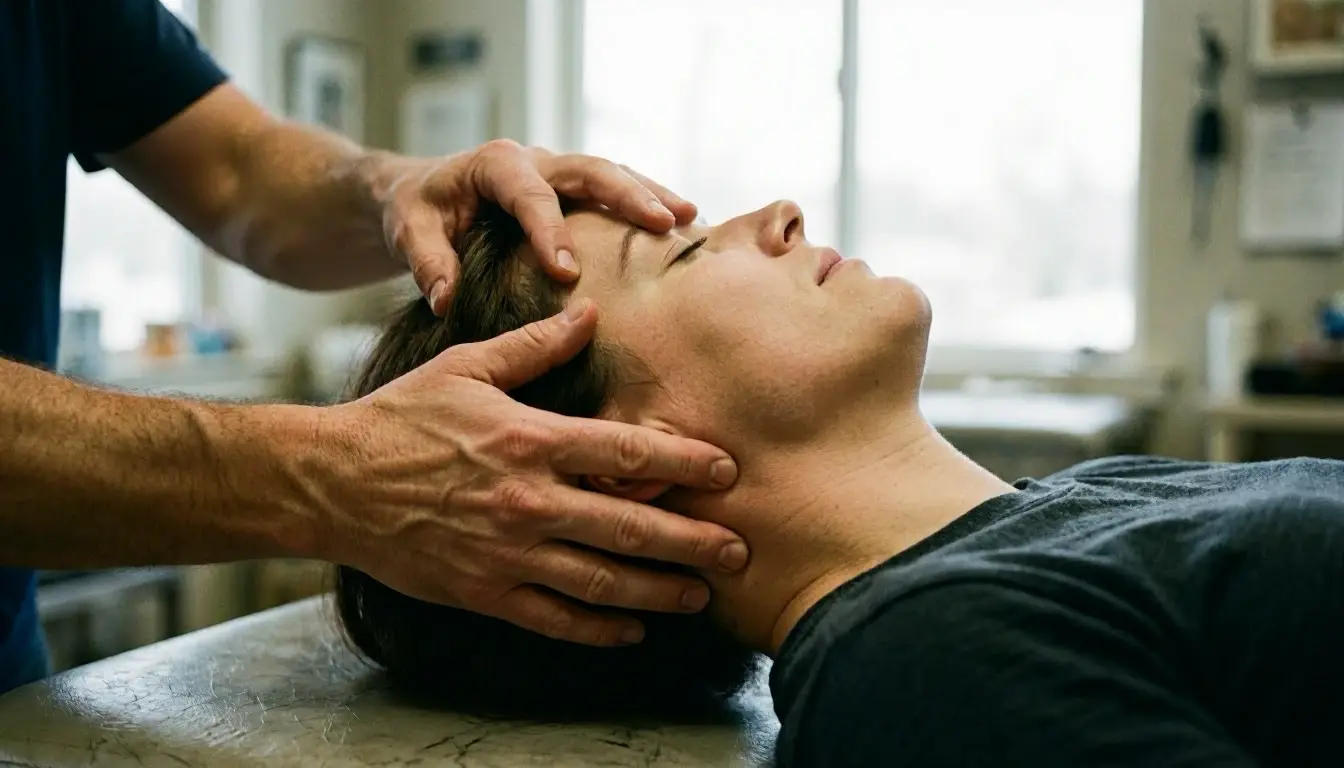
Neck Pain is discomfort, stiffness. Or sharp pain in the cervical spine—the seven vertebrae that support the head and enable movement. It can result from muscle strain, joint issues, nerve compression, injury. Or poor posture, often limiting daily activities like turning the head or lifting objects.
Category
Musculoskeletal condition
Used for
Identifying cervical spine dysfunction or injury
Common confusion
Often mistaken for tension headaches or shoulder strain
Also called
Cervicalgia, Stiff neck
Often discussed with
Neck Injury Treatment, Whiplash Injury Treatment

Neck pain is common. It affects the neck bones. These bones are called vertebrae.
Related glossary terms: Headache, Joint Dysfunction, Posture Correction.
There are seven vertebrae (C1 to C7). They hold up your head. They help you move it.
Your neck bends a lot. But this makes it easy to hurt. Your head is heavy too.
Pain can come from muscles or ligaments. It can come from nerves or joints. It can come from discs.
Pain may feel dull or sharp. It may feel stiff. Most cases go away on their own.
But bad or long pain needs help. It may mean something else is wrong.
Neck pain has two types. Short pain lasts days or weeks. Long pain lasts months.
Short pain often comes from hurt. A car crash or sports can cause it. Bad sleep or desk work can too.
Long pain may come from wear and tear. It can come from arthritis (joint pain). It can come from a hurt disc.
The neck has bones and discs. It has joints, muscles. And nerves. If any hurt, you feel pain.
Bad posture can strain muscles. This causes swelling and pain. A hurt disc can press on nerves.
This can cause pain in your arms. It can cause numbness too. Joints can wear out over time.
This can hurt and limit movement. Pain can spread too. It can show up in shoulders or back.
Nerves in the neck go to other places. That's why pain can move. Headaches can come from neck nerves.
Arm pain can too. Doctors check your neck to find the cause. They may use X-rays or MRI scans.

Neck pain is not just annoying. It can change your life. It can keep you from sleeping.
It can make work hard. It can stop daily tasks. This can make you tired and sad.
Bad cases can stop movement. Driving may be hard. Using a computer may hurt.
Housework may be tough. Untreated pain can get worse. It can cause lasting harm.
Neck pain can affect balance. Your neck helps you know where you are. If it hurts, you may feel dizzy.
You may feel like the room spins. This is called vertigo. It can make you fall.
Older adults may fall more. Fixing neck pain early helps. It can stop other problems.
Some neck pain needs fast help. Bad pain after a crash needs a doctor.
A fall or sports hurt needs one too. You may have a broken bone. You may have a hurt spine.
Numbness or tingling is bad. So is weakness in arms or hands. These mean a pinched nerve.
This can cause lasting harm. Pain with fever is bad. So is pain with headaches.
Losing weight for no reason is bad too. These may mean a serious problem.
People with arthritis get neck pain. So do people with worn discs. Stress can make it worse.
Bad sleep can too. So can sitting too long. Office workers get this pain.
Drivers get it too. Phone users get it. Their heads lean forward too much.
This strains the neck. You can help stop pain. Fix your work space.
Take breaks often. Do neck exercises.
Tension headaches cause pain in the head, often due to muscle tightness in the neck and scalp. While neck pain is localized to the cervical spine and may not involve head pain.
Whiplash is a specific type of neck injury caused by sudden back-and-forth movement, often from car accidents. While neck pain is a broader symptom with many possible causes.
Shoulder pain originates in the shoulder joint or surrounding muscles. While neck pain affects the cervical spine; however, the two can overlap due to shared nerve pathways.
Neck pain is often multifactorial, meaning multiple issues—like muscle tension, joint dysfunction. And poor ergonomics—can contribute simultaneously. A thorough evaluation should address not just the pain itself but also underlying habits and structural imbalances to prevent recurrence.
After spending hours hunched over a laptop, a graphic designer notices stiffness and a dull ache in their neck. The pain worsens when turning their head to check a second monitor. After adjusting their chair height and taking breaks to stretch, the discomfort lessens. But persistent stiffness prompts a visit to a chiropractor for further evaluation.
Headache is a continuous pain or discomfort in the head, scalp. Or neck area that can range from mild to severe. Headaches may occur on one or both sides of the head, be isolated to a specific location. Or spread across the entire head. They can last from a few minutes to several days and may be caused by stress, tension, dehydration, poor posture. Or underlying medical conditions.
Joint Dysfunction is a condition where a joint in the body moves improperly or loses its normal range of motion. It often causes pain, stiffness. Or swelling and may result from injury, overuse, poor posture. Or underlying health issues like arthritis. Joint Dysfunction can affect any joint, including the spine, knees, shoulders.
Posture Correction is the process of identifying, addressing. And improving misalignments in the body’s natural position to reduce strain, pain. And long-term damage. It involves exercises, ergonomic adjustments, manual therapies.
Chiropractic Adjustment is a precise, hands-on procedure chiropractors use to apply controlled force to a joint in the spine or other body part. The goal is to improve alignment, reduce nerve irritation. And restore normal movement. Adjustments are often done manually but may also use small instruments. They're a core treatment in chiropractic care for pain relief and function improvement.
ChiropractorRiverdale.com
Contact ChiropractorRiverdale.com for practical guidance on Neck Pain and related chiropractor work in Riverdale.