Glossary

What is Headache?

Headache is a continuous pain or discomfort in the head, scalp. Or neck area that can range from mild to severe. Headaches may occur on one or both sides of the head, be isolated to a specific location. Or spread across the entire head. They can last from a few minutes to several days and may be caused by stress, tension, dehydration, poor posture. Or underlying medical conditions.

Reviewed by ChiropractorRiverdale.comSources reviewed: Mayo Clinic, National Institute of Neurological Disorders and Stroke

Quick Facts About Headache

Category

Neurological symptom

Used for

Identifying pain triggers or health conditions

Common confusion

Mistaking migraines for regular tension headaches

Also called

Cephalalgia, Head pain

Often discussed with

Chiropractic Consultation and Diagnosis, Neck Injury Treatment

Key Takeaways About Headache

Understanding Headache

Headache in Chiropractor: Headache is a continuous pain or discomfort in the head, scalp. Or—visual guide

Many people get headaches. They can happen at any age. The pain is in your head, neck. Or scalp.

Related glossary terms: Neck Pain, Posture Correction, Chiropractic Adjustment.

Headaches can make life hard. You may not work well. Fun activities may not feel fun.

Some headaches hurt a little. Others feel sharp or throb. They can last short or long.

There are many types. The common ones are tension, migraine. And cluster headaches.

Tension headaches feel like a tight band. Stress or bad posture can cause them.

Migraines hurt more. They can make you sick. Bright light may bother you.

Cluster headaches are rare. They hurt a lot. They come in cycles over weeks.

How Headaches Develop?

Many things can cause headaches. Your body, surroundings. Or habits may play a part.

Tension headaches come from tight muscles. Stress or too much screen time can do this.

Tight muscles can hurt nerves. They can also stop blood from flowing well.

Not drinking water can cause headaches. So can missing sleep or meals.

Too little caffeine can also trigger them. It changes blood vessels and brain chemicals.

Migraines are different. They start in the brain. Many things can set them off.

Hormones, foods. Or loud noises may start one. Strong smells can too.

Blood vessels in the brain get bigger. They release chemicals that cause pain.

Some people see warning signs. These are called auras. They may see flashes or spots.

Knowing your triggers helps. You can stop headaches before they start.

Why Headaches Matter?
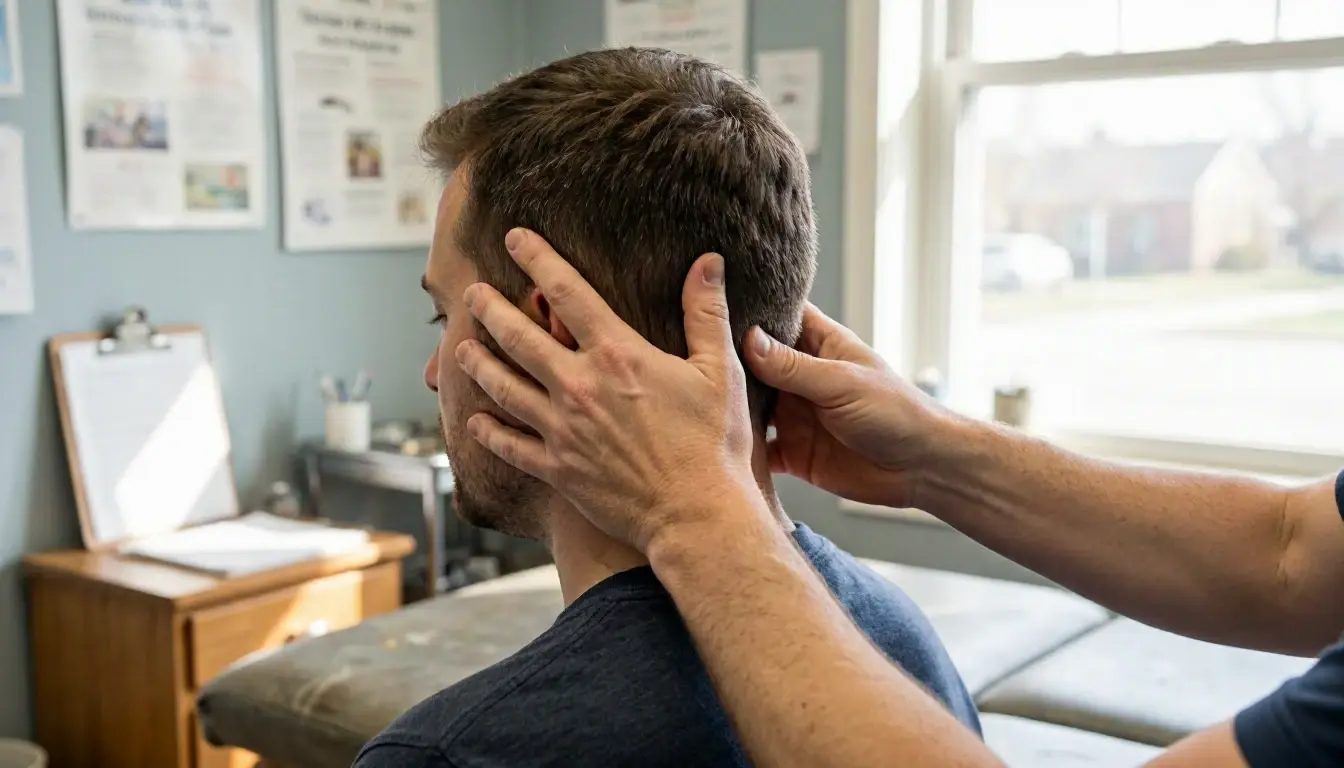
How Headache applies to Chiropractor services in Riverdale, United States—practical illustration

Most headaches are not dangerous. But some need a doctor’s help.

Too many headaches can hurt your life. They can make you miss work or school.

They may mean something else is wrong. High blood pressure can cause them.

So can infections or brain problems. Knowing the type helps find the cause.

Simple changes can help. Drink water. Sleep well. Sit up straight.

But some headaches need a doctor. If they get worse, see one.

Fever, confusion. Or bad vision mean go now. Quick help can stop bigger problems.

When Headaches Matter Most?

Some headaches need fast care. They may stop you from daily tasks.

Very bad pain can mean big trouble. It could be a stroke or other problem.

Headaches after a head bump need help. So do ones that hurt more when you move.

Throwing up or strange feelings mean go to the doctor now.

If headaches come often, track them. Write down when they start and how long they last.

Note what might have caused them. This helps find patterns.

In Riverdale, GA, many people sit a lot. Long drives or desk jobs can cause headaches.

Fixing your posture can help. It keeps muscles from getting too tight.

How to Evaluate Headache?

Related Concepts Compared

Headache vs. Migraine

Migraines are a specific type of headache with intense throbbing pain, often on one side of the head. And may include nausea or light sensitivity.

Headache vs. Tension headache

Tension headaches cause mild to moderate dull pain, often described as a tight band around the head, usually without additional symptoms.

Headache vs. Cluster headache

Cluster headaches are severe, recurring headaches that occur in groups or clusters, often around one eye. And are less common than migraines or tension headaches.

Expert Note

Many headaches originate from musculoskeletal imbalances, particularly in the neck and upper back. Poor posture, repetitive strain. Or spinal misalignments can irritate nerves and contribute to chronic headache patterns. Addressing these underlying issues can provide long-term relief beyond temporary pain relief.

Common Mistakes or Myths About Headache

  • Ignoring frequent headaches as just stress, when they could signal an underlying condition.
  • Overusing pain relievers, which can lead to rebound headaches.
  • Assuming all headaches are migraines without considering other types or causes.
  • Not drinking enough water, which is a common and easily preventable headache trigger.

Headache in Practice: A Real-World Example

After spending hours working at a computer with poor posture, a person notices a dull, tightening pain across their forehead and temples. They realize they’ve been clenching their jaw and hunching their shoulders. Drinking water, stretching. And adjusting their chair height helps reduce the discomfort within an hour.

Related Services

Related Terms

Neck Pain

Neck Pain is discomfort, stiffness. Or sharp pain in the cervical spine—the seven vertebrae that support the head and enable movement. It can result from muscle strain, joint issues, nerve compression, injury. Or poor posture, often limiting daily activities like turning the head or lifting objects.

Posture Correction

Posture Correction is the process of identifying, addressing. And improving misalignments in the body’s natural position to reduce strain, pain. And long-term damage. It involves exercises, ergonomic adjustments, manual therapies.

Chiropractic Adjustment

Chiropractic Adjustment is a precise, hands-on procedure chiropractors use to apply controlled force to a joint in the spine or other body part. The goal is to improve alignment, reduce nerve irritation. And restore normal movement. Adjustments are often done manually but may also use small instruments. They're a core treatment in chiropractic care for pain relief and function improvement.

Trigger Point Therapy

Trigger Point Therapy is a manual treatment method that targets tight, painful knots in muscles called trigger points. These knots can cause localized pain or refer pain to other areas of the body. The therapy involves applying focused pressure to these points to release tension, improve blood flow. And restore normal muscle function, often providing relief from chronic or acute muscle pain.

Myofascial Release

Myofascial Release is a hands-on therapy that gently stretches and loosens the fascia, the thin layer of connective tissue surrounding muscles, bones. And organs. This technique helps reduce pain, improve movement. And restore function by releasing tightness or restrictions in the fascia caused by injury, stress. Or poor posture.

ChiropractorRiverdale.com

Have Questions About Headache?

Contact ChiropractorRiverdale.com for practical guidance on Headache and related chiropractor work in Riverdale.

+1 678-605-9917