Understanding Ultrasound Therapy
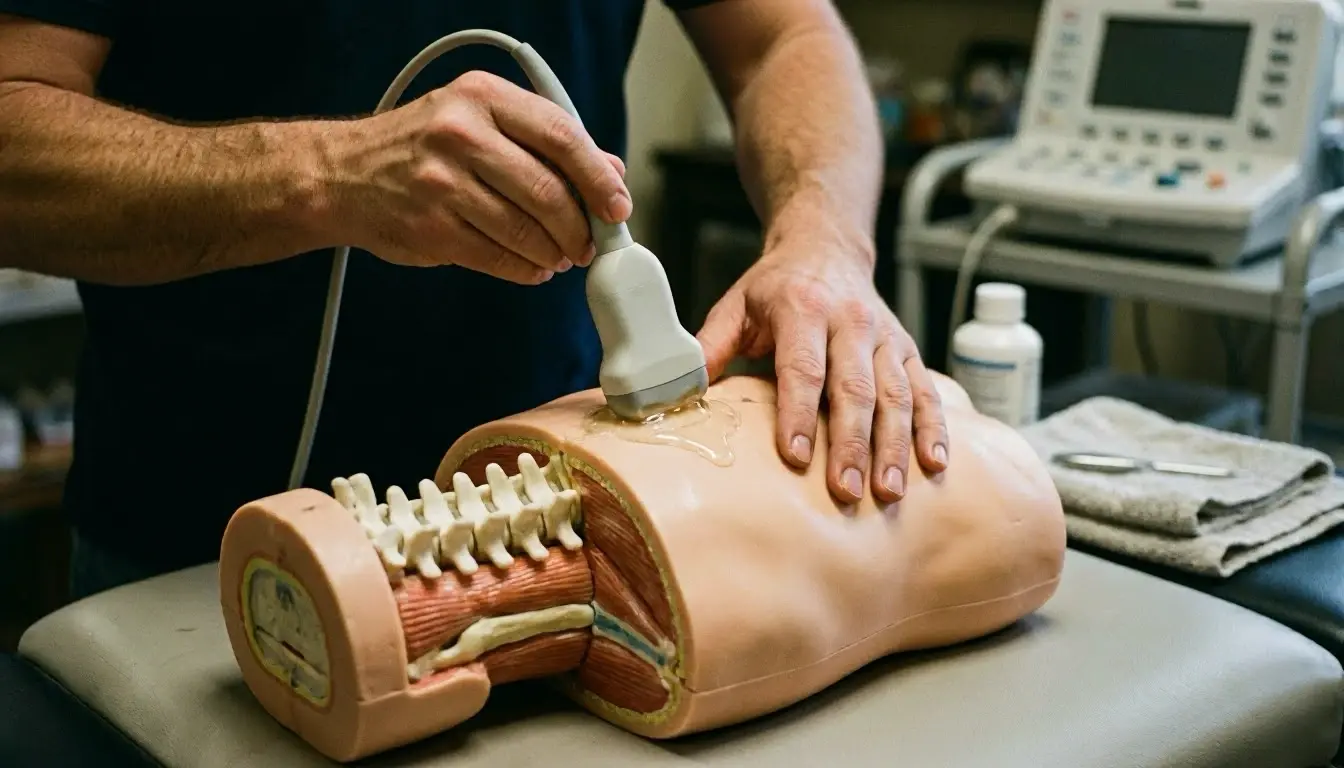
Ultrasound therapy helps your body heal itself. It's used in chiropractic care and physical therapy.
Related glossary terms: Soft Tissue Therapy, Chiropractic Adjustment, Electrical Muscle Stimulation.
It's not like the ultrasound used for pictures. That kind shows organs inside your body.
This treatment helps heal injuries in soft tissues. It uses a small handheld device.
The device sends sound waves you can't hear. They are very fast, between 1 and 3 megahertz.
Your body's tissues soak up these waves. They create a gentle warmth inside.
This warmth helps blood flow better. It cuts down swelling and loosens tight muscles.
That makes it easier to move. It helps you heal faster from injuries.
Many people think of pregnancy checks. But this ultrasound does something else.
It treats problems like muscle strains. It also helps with tendonitis (tendon swelling) and bursitis (joint swelling).
It's painless and quick. Each session takes just a few minutes.
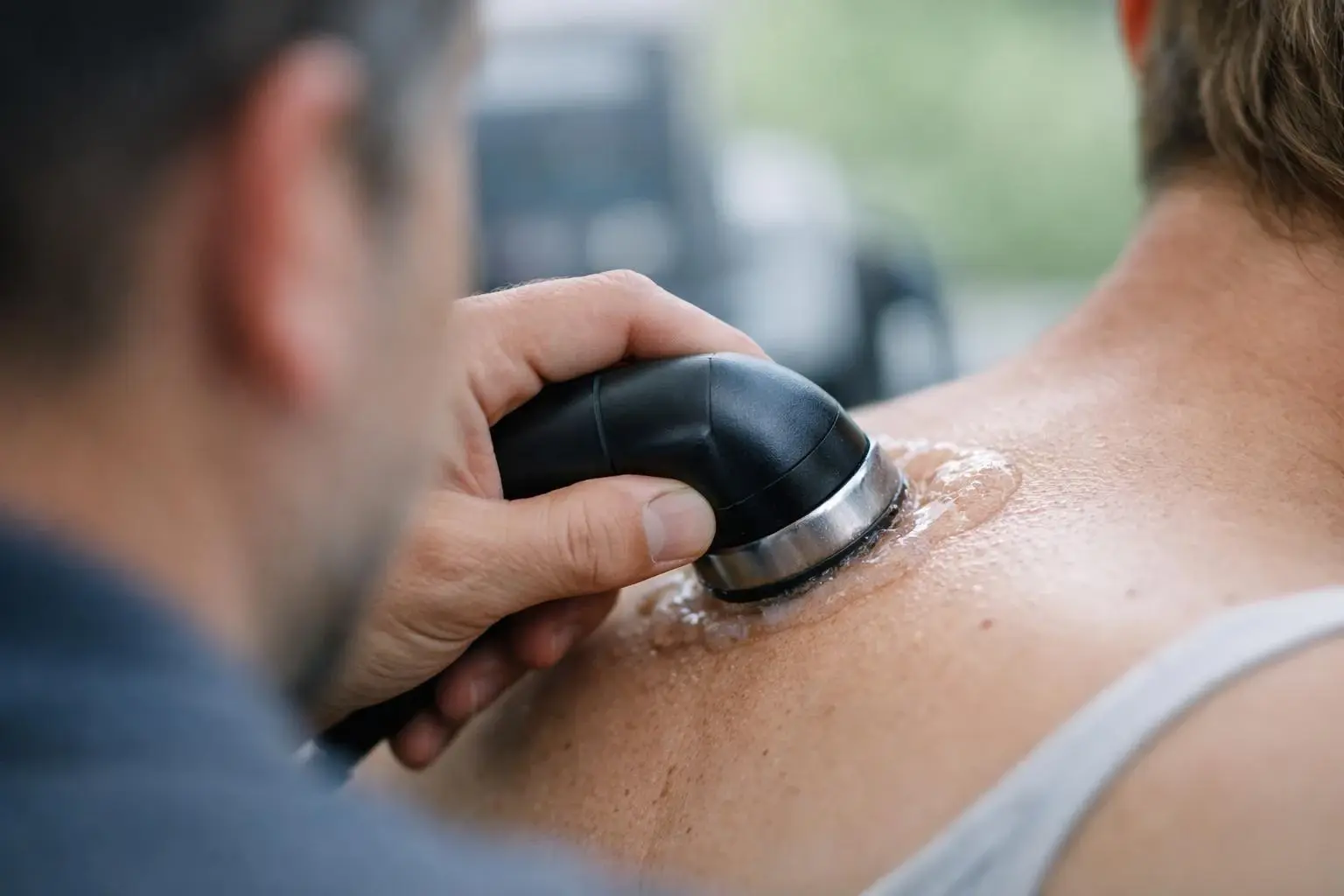
A trained person puts gel on your skin. The gel helps the sound waves travel better.
Then they move the device in small circles. It goes over the hurt area.
It feels warm but not hot. Most people say it's soothing.
How Ultrasound Therapy Works?
Ultrasound therapy turns electricity into vibrations. The device has a crystal inside.
The crystal shakes fast when electricity flows. This makes sound waves.
The waves go through your skin. They reach the tissues underneath.
The waves make tissues shake too. This creates a little heat.
The heat is mild. But it boosts blood flow to the hurt spot.
Blood brings oxygen and food. It takes away waste that slows healing.
There are two main types. One is thermal (heat) ultrasound.
Thermal ultrasound sends waves all the time. The heat relaxes tight muscles.
It helps you move better. The other type is mechanical (movement) ultrasound.
Mechanical ultrasound sends waves in pulses. These create tiny bubbles in tissues.
The bubbles grow and shrink. This is called cavitation (bubble action).
Cavitation breaks down scar tissue. It also cuts down swelling.
Both types are often used together. This gives the best healing results.
The power is measured in watts per area. Lower power helps new injuries with swelling.
Higher power works better for long-term problems. Like tight muscles that won't loosen.
The speed of waves matters too. Slower waves (1 MHz) go deeper.
They reach muscles and tendons. Faster waves (3 MHz) stay near the surface.
They help ligaments and skin. Your chiropractor picks the right settings.
They choose based on your problem.
Why Ultrasound Therapy Matters?
Ultrasound therapy is safe and drug-free. It eases pain and speeds up healing.
Many people like it better than surgery. They don't want surgery's risks.
Medicine can cause side effects. Ultrasound doesn't do that.
It can cut down on pain pills. This helps people who can't take some medicines.
Allergies or health problems can stop them. Ultrasound is a good choice then.
It helps athletes get back to sports faster. It cuts down time lost to injuries.
It also makes other treatments work better. Ultrasound is often used with stretching.
It's used with massage too. Or with chiropractic adjustments (spine fixes).
More blood flow helps a lot. Relaxed muscles help too.
This makes adjustments easier. It helps patients do healing exercises.
Ultrasound is great for full care plans. It helps with long-term pain.
Like back pain or neck pain. Or injuries from doing the same thing over and over.
When Ultrasound Therapy Matters Most?
Ultrasound therapy helps with soft tissue injuries. It works best when swelling or pain starts fast.
It's good for sprains (stretched ligaments) or strains (pulled muscles).
It cuts down swelling. It helps you heal faster.
It also helps with long-term problems. Like tendonitis (tendon swelling) or arthritis (joint pain).
These cause stiffness and discomfort. Ultrasound can ease that over time.
Ultrasound helps before or after other treatments. It relaxes muscles before a spine fix.
This makes the fix work better. It also helps after exercises.
It cuts down soreness. It stops stiffness from setting in.
It's part of many rehab programs. For people after surgery.
For athletes healing from injuries. For workers with stress injuries.
But it's not for everyone. Don't use it on open wounds or broken bones.
Don't use it near metal implants. Some health problems rule it out too.
Like cancer or blood clotting issues. Always check with your doctor first.